

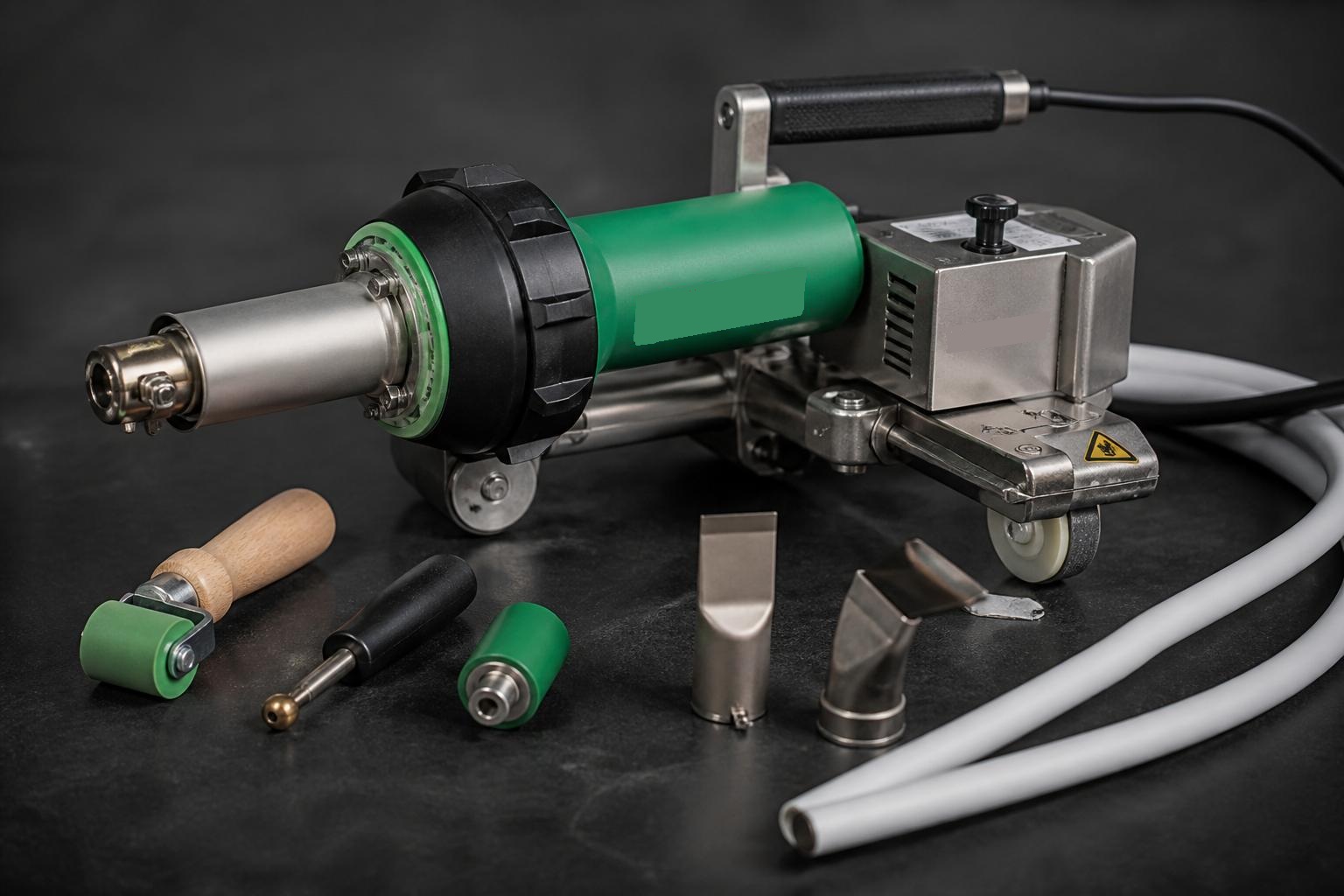
The best hot air welding tool for PVC in South Africa is an electronically controlled handheld hot air gun equipped with closed-loop temperature regulation, such as professional-grade industrial tools calibrated for high ambient consistency. Because PVC (polyvinyl chloride) has a narrow thermal processing window between 260°C and 320°C, precise heat control prevents scorching the polymer or producing weak cold joins. In South African workshop and site conditions, pairing a reliable digital hot air welder with proper speed nozzles ensures consistent, certified weld strength across unplasticised PVC (PVC-U) pipework, plastic sheeting, and flexible vinyl membranes.
Key Features of Top-Performing PVC Hot Air Welders
Working with thermoplastic materials across Gauteng requires equipment capable of handling fluctuating site conditions. Highveld temperature swings and generator-driven power supplies demand robust internal heating elements. When selecting gear, understanding the equipment required for professional PVC plastic welding in South Africa helps ensure your setup withstands daily industrial demand.
Every dependable hot air welding gun should feature several core engineering standards:
- Digital temperature controls that hold thermal consistency regardless of ambient changes
- Integrated ceramic heating elements with automatic thermal protection mechanisms
- Ergonomic grips and balanced weight distribution for long fabrication shifts
- Quick-change nozzle adaptors compatible with round and high-speed tacking tips
Choosing Between Handheld Hot Air Guns and Automatic Welders
Your specific application determines whether a handheld tool or an automated machine produces the best return on investment. Fabricators handling chemical tanks, ventilation ducts, and drainage sumps in Johannesburg industrial zones rely primarily on manual hot air guns. Meanwhile, large-scale geomembrane installers and truck tarpaulin manufacturers benefit from self-propelled overlap welders.
Handheld Hot Air Guns for Fabrication and Repairs
Manual tools offer the versatility needed for tight corners, structural tank seams, and on-site pipe modifications. Operating these tools requires using proper feed pressure with speed nozzles to fuse the PVC welding rod into the prepared groove.
Automatic Hot Air Overlap Welders
Automated welders excel on flat, long-run seams where continuous speed and contact pressure eliminate human error. These machines suit flexible PVC membranes, dam liners, and architectural tensile structures.
Essential Accessories for Clean PVC Welds
A top-tier heat gun requires the right attachments to produce structural joints that comply with standard industrial tolerances. Investing time in sourcing certified PVC plastic welding tools in South Africa guarantees that nozzle attachments seat firmly without leaking hot air or losing pressure.
Ensure your mobile welding kit includes these foundational accessories:
- Standard 5mm reduction nozzles to direct concentrated airflow
- Speed welding nozzles sized specifically for 3mm, 4mm, or 5mm triangular and round PVC rod
- Tacking tips to tack sheet material together prior to the main structural pass
- Quarter-moon scraping knives and seam testers for weld inspection
Best Practices for Hot Air Welding PVC on Site
Welding PVC demands careful thermal management because overheating releases hydrochloric acid gas and degrades the polymer chain. Maintaining clean joint surfaces and steady travel speeds guarantees long-term durability in local industrial operations.
Follow these operational stages for every structural weld:
- Scrape the joint surface thoroughly with a rotary burr or hand scraper to remove the oxidised top layer
- Pre-heat the base substrate and filler rod simultaneously at a consistent 45-degree angle
- Apply continuous downward pressure on the welding rod to achieve an even wash along both sides of the seam
- Allow the joint to cool naturally to ambient temperature without quenching in water
Precision Solutions With Plastek
Plastek provides technical support, professional plastic welding machinery, and reliable servicing for fabrication specialists across South Africa. Whether you need heavy-duty handheld welders, specialised nozzles, or quality filler materials for workshop fabrication and site repairs, our team delivers high-standard equipment built for demanding conditions. Click the button below to discuss your project requirements or receive a competitive quote.
FAQs
What temperature should I set on a hot air gun for welding PVC?
The standard welding temperature for rigid PVC (PVC-U) ranges between 280°C and 310°C, depending on the ambient air temperature and thickness of the material. Flexible PVC typically requires slightly lower heat, around 260°C to 290°C.
Can I use a standard DIY heat gun for welding PVC plastic?
Standard hardware store heat guns lack electronic closed-loop temperature control and consistent airflow pressure. DIY heat guns often overheat or underheat the material, creating weak joints that crack under mechanical stress or chemical exposure.
How do power cuts and voltage fluctuations affect hot air welders in South Africa?
Voltage drops from unstable power grids or uncalibrated generators cause heating element temperatures to fluctuate wildly. Professional welding tools with digital voltage stabilisation protect the heating elements and maintain a steady weld seam during backup power operations.
How do I test if my PVC hot air weld is sound?
Use a mechanical seam probe or spark tester along the seam once it has cooled completely. A well-executed weld displays an even wash of melted material along both flanks of the filler rod without scorching, discolouration, or voids.
