

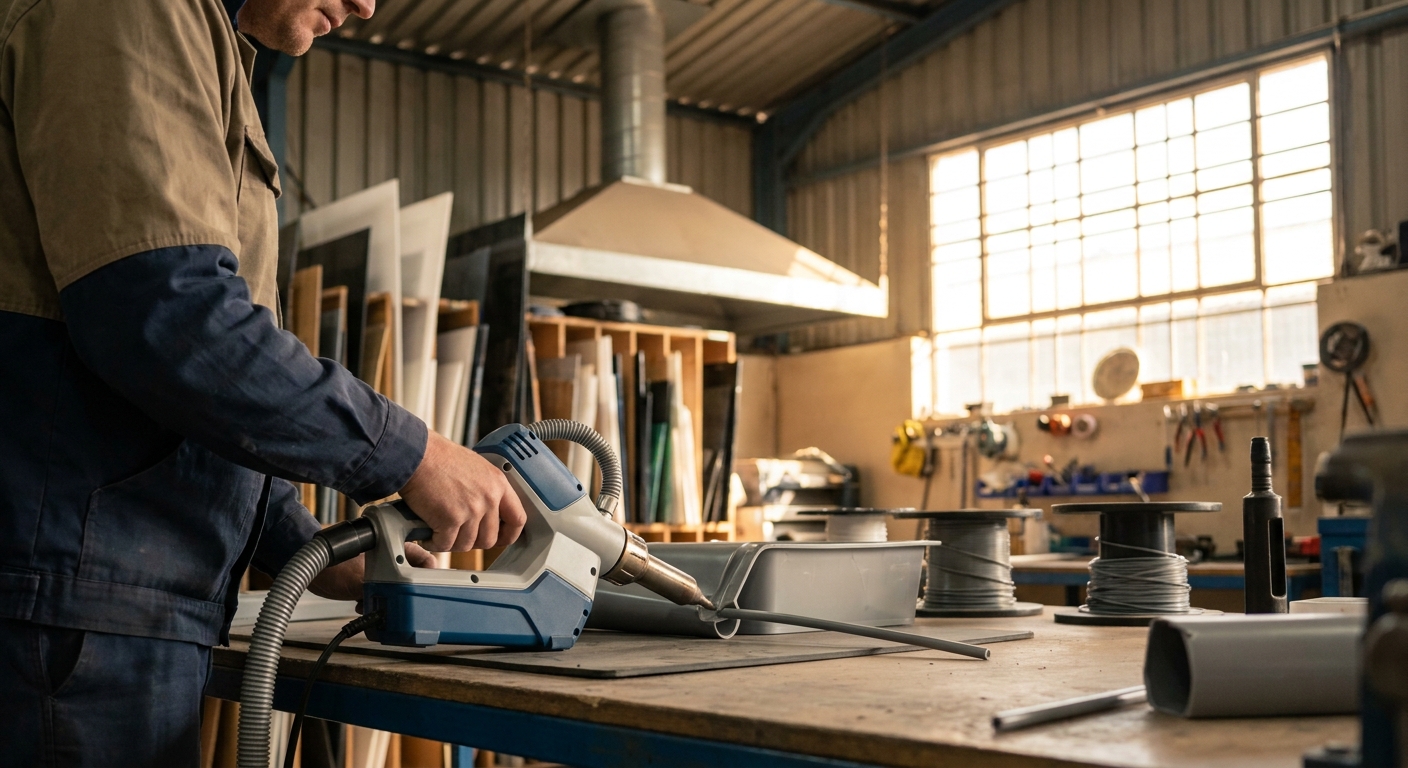
The RiOn range is the best plastic welding machine for beginners. This hand-held hot air tool combines thermal precision with manual control to ensure high-quality fusion in PVC and HDPE materials. It allows operators to transition from basic manual fixes to industrial fabrication without the complexity of large extrusion machines. Its affordability and versatility make it the standard for businesses prioritising operational uptime.
Mechanics of Operational Transition
Scaling a fabrication business requires the founder to delegate technical execution to entry-level technicians using reliable hardware. Implementing the RiOn range allows for a standardised training protocol that reduces the time spent on manual supervision of new technicians. This hardware consistency ensures that output quality remains stable even as the team grows and handles more complex tank fabrication projects.
Critical administrative delegation points for scaling include:
- Onboarding a PA to handle rapid client rescheduling for site-based repairs.
- Automating supplier quote requests for PVC and HDPE consumables.
- Managing personal logistics for lead technicians through digital calendar systems.
The bottom line is that the right hardware simplifies the delegation of high-frequency technical tasks.
Operational Precision in Material Repairs
Efficiency in plastic repair is dictated by thermal consistency. The RiOn tool maintains steady air temperature, which is necessary for tacking liners effectively with 40mm or 20mm nozzles. When paired with a silicon hand roller, the tool creates a structural bond that withstands the pressure found in industrial ventilation systems.
Thermal Fusion Workflows
Standardising the use of specific nozzles allows teams to predict project timelines with greater accuracy. High-frequency repairs often fail due to improper heat distribution, a problem this tool solves through mechanical reliability. Using a 40mm nozzle for wider surfaces and a 20mm nozzle for detail work ensures the material fuses without air pockets.
Scaling Production with Extrusion Welding
Moving beyond basic patches involves using plastic rods of identical composition to the base material for extrusion welding. This technique is necessary for fabricating water tanks and processing containers where structural loads are significant. Mastering this allows a business to scale its service offering from simple repairs to full-scale container manufacturing.
Technical requirements for high-yield extrusion welding comprise:
- Matching plastic rods specifically to PVC, PP, or HDPE base materials.
- Maintaining a constant feed rate to prevent thermal degradation of the polymer.
- Ensuring surfaces are decontaminated prior to the welding sequence.
- Calibrating heat settings to match the specific melting point of the thermoplastic.
Precision Solutions with Plastek
Scaling your operational capacity requires investing in equipment that reduces technical bottlenecks. The RiOn range provides the reliability needed for high-stakes fabrication and repair projects. Request a brochure using the button below.
FAQs
Can beginners use the RiOn for HDPE liner tacking?
The RiOn tool is designed for this specific application when paired with a flat nozzle and silicon roller. Its intuitive heat control allows new users to learn the thermal properties of HDPE without damaging the material.
What plastics are compatible with the RiOn range?
This tool works effectively with PVC, Polypropylene, and High-Density Polyethylene. Using matching plastic rods ensures the weld maintains the same chemical resistance as the original structure.
How does the RiOn assist in tank fabrication?
It provides the primary heat source for the extrusion welding method used to join large thermoplastic sheets. This makes it a foundational tool for businesses specialising in water or ventilation processing containers.
Is the RiOn suitable for the South African market?
Its robust design handles the demands of local fabrication environments where equipment must be portable and durable. The tool is frequently used in remote sites where rapid repair cycles are necessary to prevent operational downtime despite load-shedding disruptions.
