

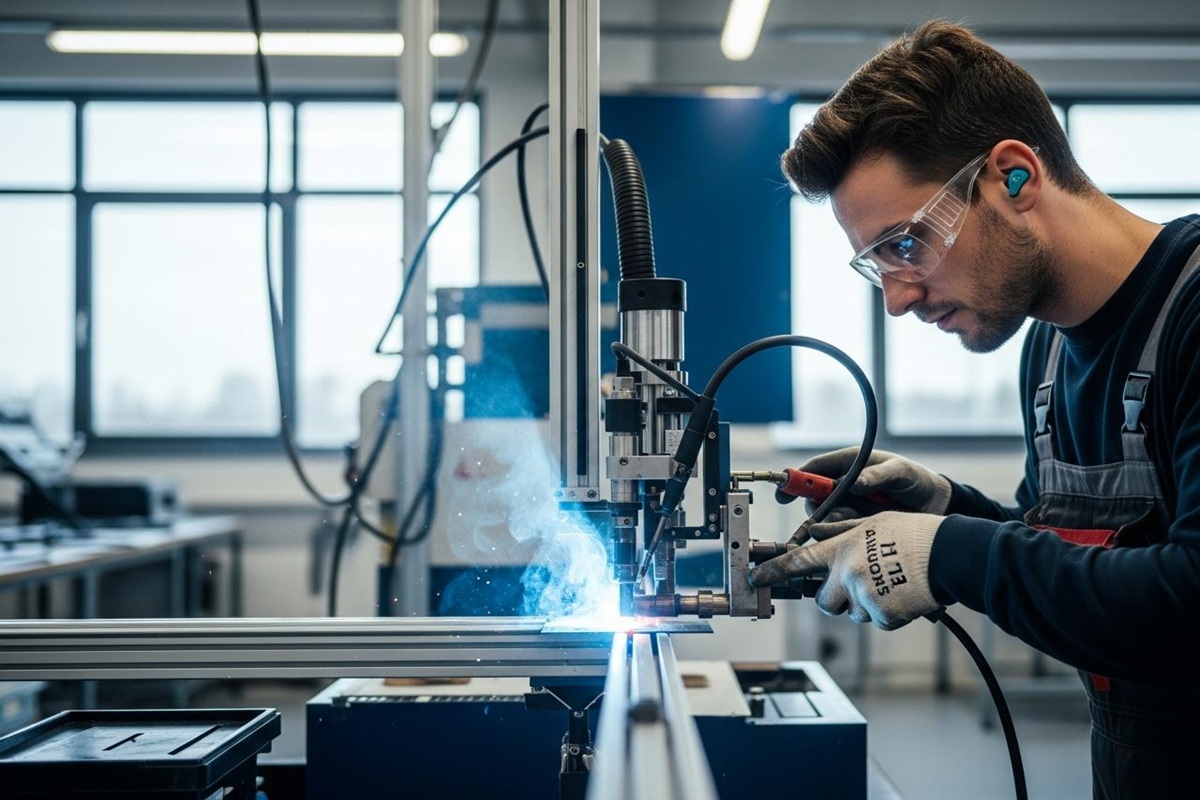
From mining tanks to water pipes, seamless and leak-proof plastic joins are the backbone of modern industry. But what actually happens at a microscopic level when a machine creates that bond?
It isn’t magic or glue; it’s a precise science of molecular fusion. Understanding this process is vital for anyone looking to guarantee the quality and longevity of their plastic fabrications.
The Core Principle: It’s All About Molecular Bonding
The fundamental goal of plastic welding is achieving molecular bonding, where long polymer chains from two separate pieces intermingle to form a single, homogenous part. This process only works on thermoplastics (like HDPE, PP, and PVC), which can be melted and reformed without degrading.
To achieve this fusion, every weld relies on three critical factors:
- Heat
- Pressure
- Time
The Three-Step Process of Every Plastic Weld
Regardless of the machine, every high-quality plastic weld follows a consistent three-stage journey to transform separate parts into a single, solid piece:
- Preparation and Heating: Surfaces are cleaned to remove contaminants before being heated to their specific melting point, transitioning the plastic into a molten state.
- Controlled Pressure: Calculated force is applied to the molten surfaces, causing polymer chains to intermingle and fuse without displacing the material.
- Cooling and Solidification: The joint is allowed to cool under pressure, locking the molecules into a unified structure that matches the strength of the original material.
Common Types of Plastic Welding Machines and How They Work
Different applications demand different tools. While all machines follow the principles above, they apply them in unique ways. Here are three common types you’ll find in South African workshops.
Hot Gas Welders
A hot gas welder functions much like a high-powered hairdryer. It directs a jet of extremely hot air or nitrogen onto the joint area, melting both the base material and a plastic filler rod simultaneously. The technician manually feeds the filler rod into the joint, using the hot gas to fuse everything together. These are excellent for fabricating tanks, repairing cracks, and working on detailed corners.
Extrusion Welders
Think of an extrusion welder as a larger, more powerful hot gas welder with a built-in plastic extruder. It heats the parent material with a stream of hot air while simultaneously pushing out a thick bead of molten plastic (the extrudate) directly from the machine. This allows for large, high-strength welds to be laid down quickly, making it ideal for joining thick sheets of plastic for dam liners, large-diameter pipes, and major fabrications.
Butt Fusion Welders
Butt fusion is the primary method for joining thermoplastic pipes, a common sight in South Africa’s water and mining infrastructure.
The process involves:
- Clamping two pipes into perfect alignment in the machine.
- Facing the pipe ends with a trimmer to create smooth, clean surfaces.
- Introducing a heater plate between the two ends, melting them to a precise depth.
- Removing the heater plate and pressing the molten pipe ends together under specific, controlled pressure to form a permanent, leak-proof weld.
Why Understanding the Process Matters for Your Business
Mastering the science of melting points, pressure, and cooling times empowers your team to produce consistently reliable, high-strength welds. This expertise reduces material waste, enhances on-site safety, and ensures full compliance with industry standards.
At Plastek, we believe that proper training and the right equipment are the cornerstones of successful fabrication. Getting it right ensures your final product will perform as intended for years to come.
FAQs
Can you weld all types of plastic?
No, only thermoplastics can be welded. These are plastics that can be repeatedly melted and solidified, like HDPE, Polypropylene (PP), PVC, and PVDF. Thermoset plastics, which are chemically set, cannot be re-melted and therefore cannot be welded.
What is the strongest type of plastic weld?
When performed correctly, a butt fusion weld is generally considered the strongest. The process creates a homogenous joint with the same integrity and strength as the parent pipe material itself, effectively eliminating the joint as a potential weak point.
How long does a plastic weld take to cool?
The cooling time varies significantly based on the type of plastic, the thickness of the material, and the ambient temperature. It can range from a few minutes for a small hot gas weld to over an hour for a large-diameter butt-fused pipe. Always follow the manufacturer’s or industry standard’s specified cooling times.
Do you need a filler rod for all plastic welding?
No. Hot gas and extrusion welding require a filler rod or extrudate made of the same material as the parent plastic. However, processes like butt fusion, socket fusion, and hot plate welding fuse the parent materials directly together without the need for any additional filler material.
Is plastic welding as strong as the original material?
Yes, a properly executed plastic weld should be as strong as, or even stronger than, the parent material. The goal of welding is to create a fully fused, homogenous joint where the original interface no longer exists, ensuring consistent strength throughout the entire part.
