

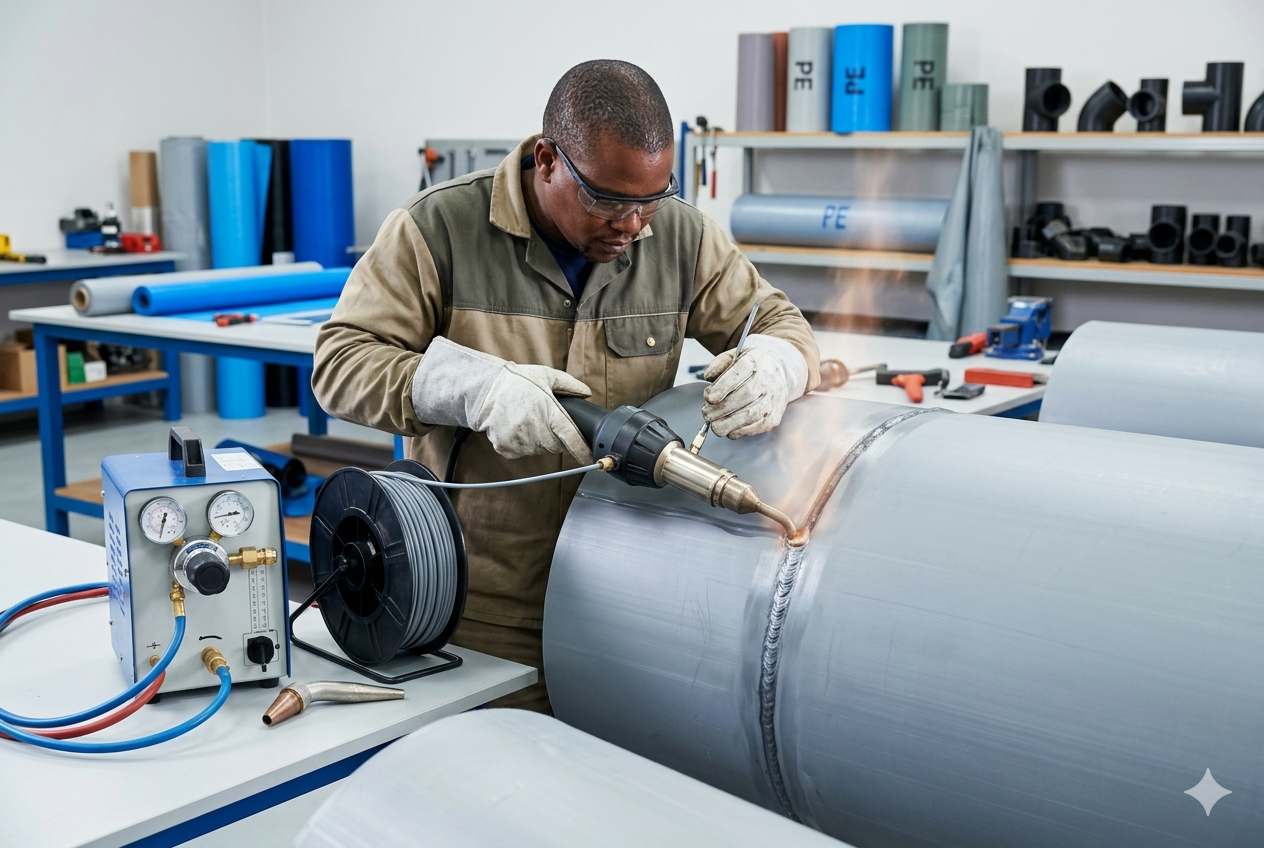
For high-density polyethylene (HDPE) applications, a professional hot air welding station is the most versatile choice, providing the precise temperature and airflow control needed for a homogenous molecular bond. For material thicknesses exceeding 6mm or large-scale industrial projects, a plastic extrusion welder becomes the superior option due to its high deposition rate.
Understanding the Basics: Can You Weld HDPE and Polyethylene?
Yes, thermoplastic welding is the primary and most reliable method for joining HDPE and other polyethylene variants. The process uses controlled heat to melt and fuse the parent material with a chemically identical welding rod, causing the polymer chains to interlink and form a single, continuous piece as it cools.
Unlike adhesives, which create only a surface-level bond, a proper weld reconfigures the plastic’s molecular structure to produce a permanent joint that maintains the material’s original strength and chemical resistance.
Top-Rated Plastic Welders for HDPE and PE Repairs
Choosing the right plastic welder for HDPE and PE repairs involves matching the machine’s heat delivery and material deposition rate to the technical requirements of the project.
- Hot Air Welding Stations: The most versatile option for polyethylene, utilizing superheated air and manual pressure to create precise, homogenous bonds in tanks and membranes.
- Operational Control: Professional hot air units offer adjustable temperature and airflow parameters, combined with specialized nozzles, to optimize heat penetration for different material grades.
- Extrusion Welders: Engineered for heavy-duty industrial fabrication, these machines extrude a continuous bead of molten plastic to join thick-walled materials and dam linings rapidly.
- Nitrogen Welders: Ideal for automotive HDPE components; these systems use nitrogen as a shielding gas to prevent oxidation, ensuring maximum bond strength in parts prone to vibration.
Selecting a tool that aligns with your material thickness and environmental conditions, you ensure a technically sound repair that restores the original structural integrity of the thermoplastic.
HDPE vs. LDPE: Choosing the Right Welding Rods
Successful fusion requires using a welding rod that matches the substrate, as mixing materials like LDPE and HDPE leads to immediate bond failure due to incompatible melt flow indexes. To ensure a correct match, identify the rigid and hard characteristics of HDPE versus the soft flexibility of LDPE.
In a controlled burn test, both polyethylene types will drip like candle wax and emit a distinct paraffin scent without producing smoke. Always verify these technical identifiers prior to welding to ensure a permanent, homogenous molecular bond.
Step-by-Step Guide: How to Weld Polyethylene for a Permanent Bond
Achieving a permanent molecular bond in polyethylene requires a disciplined approach that combines meticulous surface engineering with precise thermal application.
- Surface Preparation: All surfaces must be thoroughly cleaned to remove contaminants like dirt or oil.
- Joint Beveling: For butt joints on material thicker than 3mm, a ‘V’ groove must be cut along the seam.
- Tacking: Tack the pieces together at intervals with the welder to prevent movement or shifting during the main welding pass.
- Welding: Hold the welder nozzle at approximately a 45-degree angle to the workpiece. Simultaneously feed the welding rod into the joint while applying firm, consistent pressure. A small bead of molten plastic should form along both sides of the weld, indicating proper fusion.
- Cooling: Allow the weld to cool to ambient temperature naturally. Forced or rapid cooling can introduce internal stress, which weakens the joint.
Following this structured technical sequence ensures that the repaired section regains its original structural properties and remains resilient under operational loads.
Safety Precautions When Welding High-Density Polyethylene
The thermal welding of thermoplastics produces fumes that can be harmful if inhaled. Critical safety equipment includes:
- Respirator: A respirator fitted with organic vapour cartridges is required to filter airborne fumes.
- Heat-Resistant Gloves: Protects hands from the hot nozzle, which operates at several hundred degrees Celsius.
- Safety Glasses: Shields eyes from the stream of hot air and any potential splashes of molten plastic.
Strict adherence to these safety protocols is non-negotiable for maintaining a safe working environment and preventing long-term respiratory or physical injury during the welding process.
Partner with Plastek for Expert Plastic Welding Solutions
Selecting the wrong welding equipment or misconfiguring thermal parameters often leads to compromised structural integrity and premature bond failure. Our technical team specializes in thermoplastic fabrication and can provide an expert assessment of your specific application. We will recommend the precise hardware, rod selection, and welding procedures required to ensure safe, permanent, and homogenous bonds for your industrial projects.
We supply, support, and service a comprehensive range of professional-grade thermoplastic welding equipment across South Africa. Contact us today via the button below for a technical consultation and a customized equipment quote tailored to your operational requirements.
FAQs
What is the ideal temperature for welding HDPE?
The ideal hot air temperature for welding HDPE is between 260°C and 290°C. For extrusion welding, the extrudate temperature is typically around 230°C. The exact temperature depends on the material’s thickness, ambient conditions, and welding speed.
Can you weld HDPE to other types of plastic like PP or PVC?
No, you cannot weld HDPE to dissimilar plastics like Polypropylene (PP) or PVC. Thermoplastic welding requires the fusion of identical polymer chains. Attempting to join different plastic types will result in a complete lack of a bond because their chemical structures and melting temperatures are incompatible.
Do I need a nitrogen welder for polyethylene repairs?
A nitrogen welder is not essential for all general polyethylene repairs, but it produces a significantly stronger and cleaner weld. By shielding the molten plastic from oxygen, it prevents oxidation, which can weaken the bond. It is the recommended method for automotive and other high-stress applications.
