

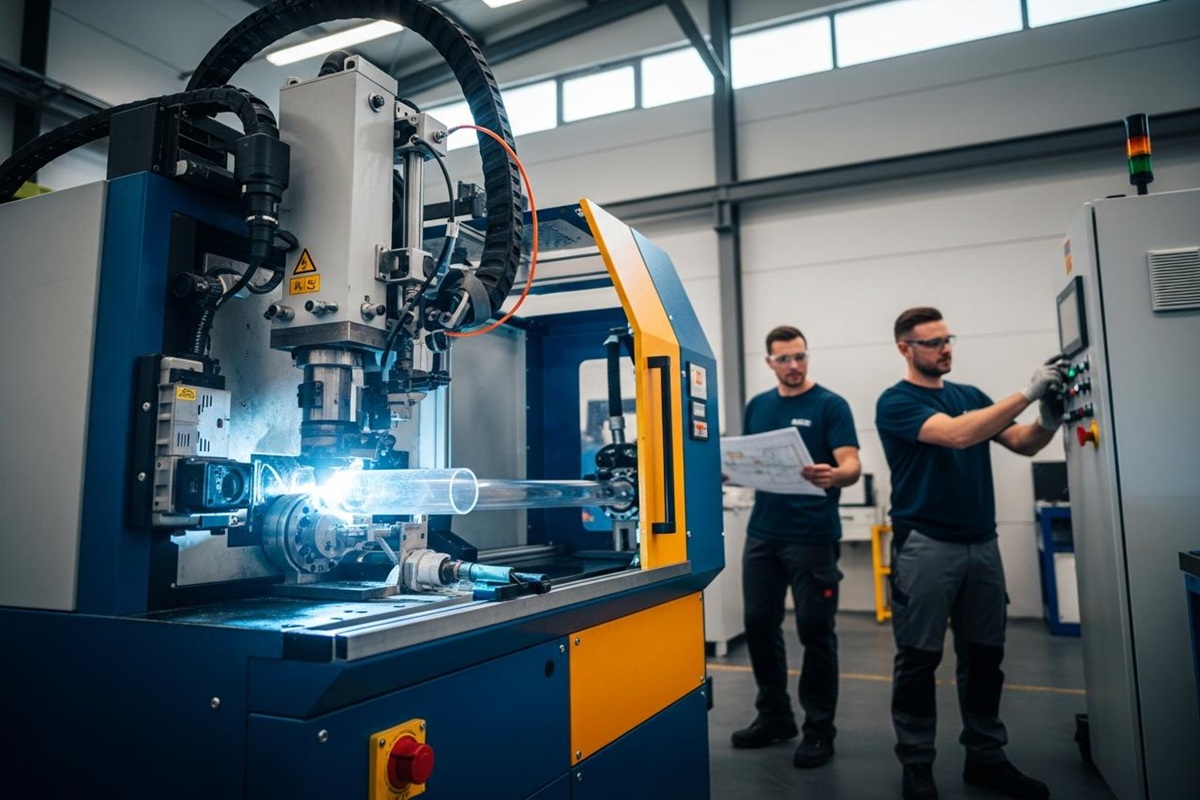
Selecting the wrong plastic welding machine can lead to catastrophic failures and massive repair costs in South Africa’s industrial sectors. Whether in mining or agriculture, the integrity of your project depends entirely on using the right equipment for the job.
With so many specialized options available, choosing between a butt fusion machine and an extrusion welder can be overwhelming. This guide cuts through the noise to provide a clear framework for selecting the exact tools you need to ensure your builds last.
Why the Right Plastic Welding Machine is Non-Negotiable
In South Africa’s core industries, a single weld can be a point of failure or a point of strength. Choosing the correct equipment ensures structural integrity and protects your company’s reputation.
- Mining: Prevents environmental and financial disasters from failed dam liners or slurry pipes.
- Agriculture: Guarantees the reliability of critical irrigation and water storage systems.
- Construction: Secures the long-term performance of water and gas reticulation networks.
Your choice of machinery directly impacts project timelines and overall safety.
The Core Types of Industrial Plastic Welding Machines Explained
Most industrial applications rely on one of three primary types of plastic welding technology. Understanding each function is the first step toward making an informed decision.
Butt Fusion Machines
Butt fusion is the process of joining two pieces of thermoplastic pipe or fitting end-to-end. The machine aligns the ends, heats them to a molten state with a heater plate, and then presses them together under controlled pressure. As the material cools, it forms a permanent, monolithic joint that is as strong, or even stronger, than the pipe itself.
- Best For: HDPE and PP pipelines for water, gas, and slurry transport.
- Key Advantage: Creates exceptionally strong, leak-proof, and continuous pipelines suitable for high-pressure applications.
Extrusion Welders
An extrusion welder functions like a heavy-duty, mobile 3D printer for plastic. It uses a heated barrel and screw to melt a plastic welding rod and extrude a continuous bead of molten material directly into the weld area. At the same time, a nozzle of hot air preheats the parent material, ensuring a complete and homogenous bond.
- Best For: Fabricating tanks, joining thick plastic sheets, repairing large cracks, and welding geomembrane liners.
- Key Advantage: Fills large gaps and creates substantial, high-strength structural welds that are impossible with other methods.
Hot Air Plastic Welders
Also known as hot gas welders, these tools are more compact and versatile. They use a jet of hot air to soften the parent material and a separate plastic welding rod simultaneously. The operator then applies pressure with a roller to fuse the materials. It is a more manual process that requires significant operator skill for consistent results.
- Best For: Detailed work, repairing thinner materials, welding plastic flooring, and fabricating smaller items.
- Key Advantage: High precision and versatility for jobs that don’t require the high-volume output of an extrusion welder.
How to Select the Right Machine for Your Application
To select the ideal machine, evaluate your specific project requirements using these four critical factors:
- Material Compatibility: Ensure the equipment matches your plastic type, such as HDPE, PP, or PVC, as melting points vary.
- Joint Type and Thickness: Choose technology based on the job; use butt fusion for long pipelines and extrusion welders for thick tanks.
- Work Environment: Determine if you need heavy, stationary workshop machinery or portable, site-ready tools for field repairs.
- Operator Skill: Factor in the need for training, as manual hot air welding requires much more precision than automated systems.
Plastek: Your Partner in Industrial Fabrication Equipment
Investing in industrial plastic welding machines requires more than just a purchase; it demands the right training and lifelong equipment support. At Plastek, we provide complete solutions tailored specifically to the unique requirements of South African industries.
Our specialists ensure your equipment perfectly matches your application, budget, and operational capacity. If you are unsure which machine fits your needs, contact us today for a professional, no-obligation consultation.
FAQs
What is the strongest type of plastic weld?
A correctly executed butt fusion weld is generally considered the strongest. The process creates a homogenous joint where the weld area becomes indistinguishable from the parent material, retaining or even exceeding the original pipe’s tensile strength and performance characteristics.
Can you weld different types of plastic together?
It is not recommended. For a strong, permanent weld to form, the materials must have compatible molecular structures and melting temperatures. Welding dissimilar plastics like HDPE to PVC will result in a weak, unreliable bond that will almost certainly fail under stress.
How much does a plastic welding machine cost in South Africa?
The price varies significantly based on type, size, and capability. A small, handheld hot air welder might cost a few thousand Rands. A large-diameter, data-logging hydraulic butt fusion machine for major pipeline projects can cost several hundred thousand Rands. It’s best to get a quote based on your specific requirements.
What maintenance do these machines require?
Regular maintenance is essential for performance and safety. This typically includes inspecting and cleaning heater plates on butt fusion machines, checking electrical connections, cleaning air filters on hot air welders, and ensuring the mechanical components of extrusion welders are clean and properly lubricated.
Is training necessary to operate an extrusion welder?
Yes, absolutely. Proper training is vital for operating an extrusion welder safely and effectively. An operator needs to understand material properties, temperature settings, welding speed, and proper preparation techniques to create a structurally sound weld. Reputable suppliers should offer comprehensive training.
