

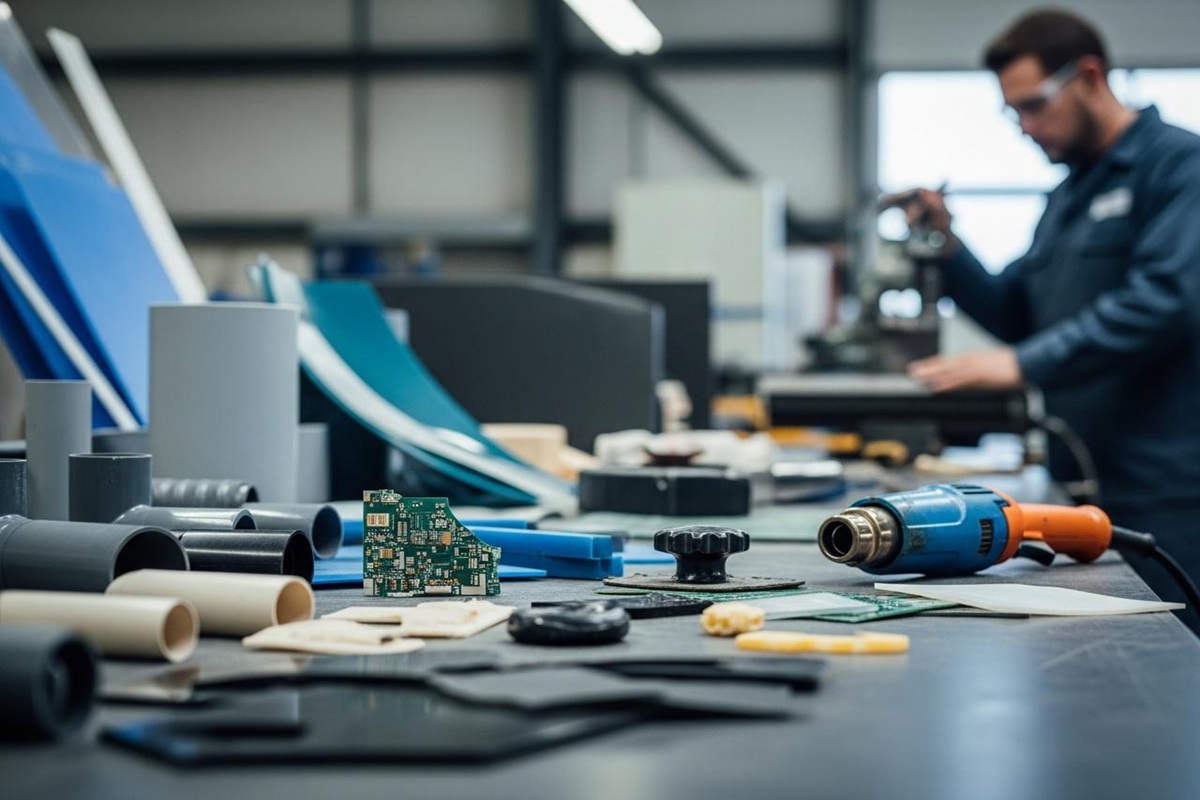
Welding the wrong plastic causes material failure and safety hazards, as many polymers char or burn instead of melting. This costly misunderstanding stems from the false belief that all plastics are heat fusible.
As a Plastek specialist, I know the secret lies in distinguishing between the two main plastic families. This guide identifies non-weldable materials and provides practical tips for recognizing them.
The Fundamental Divide: Thermosets vs. Thermoplastics
The answer to what plastics cannot be welded lies in understanding the core chemistry of the material you’re working with. All plastics fall into one of two categories: thermoplastics or thermosets.
Thermoplastics: The Weldable Group
Thermoplastics are like butter: they can be melted and re-solidified repeatedly without altering their chemical structure. This allows polymer chains to mix when heated, forming a single, continuous bond upon cooling.
Common weldable thermoplastics include:
- Polypropylene (PP)
- High-Density Polyethylene (HDPE)
- Polyvinyl Chloride (PVC)
Thermosets: The Non-Weldable Group
Think of a thermoset plastic like a baked cake; it undergoes an irreversible chemical reaction called curing. Once the solid product is formed, applying heat won’t turn it back into batter; it will only cause it to burn.
Thermosets behave this way because production creates strong, cross-linked chemical bonds. Reheating these materials leads to charring and degradation rather than melting, making them impossible to weld.
The Definitive List of Non-Weldable Plastics (Thermosets)
Projects involving thermosets require adhesives or mechanical fasteners rather than welding, as these polymers possess a permanent, cross-linked structure. Common non-weldable materials include:
- Epoxy Resins: Used in high-performance adhesives and carbon fiber composites.
- Polyurethane (PUR): Found in flexible foams, rigid insulation, and durable castors.
- Bakelite: Heat-resistant phenolic resin often found in vintage electrical components.
- Silicone: A heat-resistant elastomer used for sealants, molds, and kitchenware.
Beyond Thermosets: Other Welding Challenges
Even if a plastic is a thermoplastic, it doesn’t guarantee a successful weld. Two other factors are essential for success.
Material Incompatibility
You cannot weld two different types of thermoplastics together. For example, trying to weld High-Density Polyethylene (HDPE) to Polypropylene (PP) will fail. Their polymer chains are incompatible and won’t mix, resulting in a bond with no structural integrity. You must always weld like-to-like materials.
Additives and Fillers
Many thermoplastics are modified with additives like glass fibres, flame retardants, or UV stabilisers. These fillers can interfere with the welding process by preventing a clean flow of molten plastic, leading to a weak or inconsistent bond.
How to Identify Plastic Types Before You Weld
Identifying the material, you’re working with is the most important step.
Look for the Recycling Code
The simplest method is to check for a Resin Identification Code (the number inside the triangular arrows). This gives you a good starting point.
- Weldable: #2 (HDPE), #4 (LDPE), #5 (PP), #6 (PS).
- Weldable with safety precautions: #3 (PVC).
- Unpredictable: #7 (Other) is a catch-all category that can include both weldable and non-weldable plastics.
The Burn Test (Experts Only)
A more advanced method used by professionals is a burn test. By carefully observing the flame colour, smoke (e.g., black and sooty vs. clean), and smell of a small sample, an experienced technician can identify the plastic type. I must stress that this should only be done in a well-ventilated area with proper safety equipment, as many plastics release toxic fumes.
A Special Note on Welding PVC: Safety First
Polyvinyl Chloride (PVC), or recycling code #3, is a thermoplastic and is technically weldable. However, it presents a significant health risk if not handled correctly. When heated, PVC releases toxic fumes containing hydrogen chloride gas and dioxins. Proper, effective ventilation, and the use of a certified respirator are non-negotiable. For any PVC welding projects, I strongly recommend consulting a professional.
Get Expert Plastic Welding Advice
Don’t risk a failed project by using the wrong materials or improper techniques. Whether you need high-quality extrusion welders, hot air tools, or professional guidance on your next fabrication project in South Africa, our team is here to help.
Contact Plastek today to ensure your plastic welds are structurally sound and safe. Visit our website to explore our full range of industrial welding equipment and expert services.
FAQs
Can you weld all thermoplastics?
No. While thermoplastics as a category are weldable, you cannot weld dissimilar types together (e.g., PP to HDPE). Furthermore, certain additives and fillers in a thermoplastic can compromise the weld quality.
What happens if you try to heat a thermoset plastic?
Instead of melting, a thermoset plastic will begin to degrade, char, and burn. It undergoes chemical decomposition because of its cross-linked molecular structure, which cannot be broken and reformed by heat.
Is plastic glueing the same as plastic welding?
No. Welding uses heat to melt the parent materials, so they fuse together, creating a single, homogenous part. Glueing or bonding uses a chemical adhesive to stick two surfaces together without melting them.
How can I tell if two plastics are compatible for welding?
The best way is to ensure they are the same type. Look for the Resin Identification Code on both parts. If they match (e.g., both are #2 HDPE), they are compatible. If you are unsure, do not proceed.
Why is polyurethane difficult to join?
Polyurethane is a thermoset, meaning it doesn’t melt when heated. It cures into a solid, cross-linked structure. Because it cannot be melted, traditional welding techniques are ineffective. It must be joined using specialised adhesives.
