

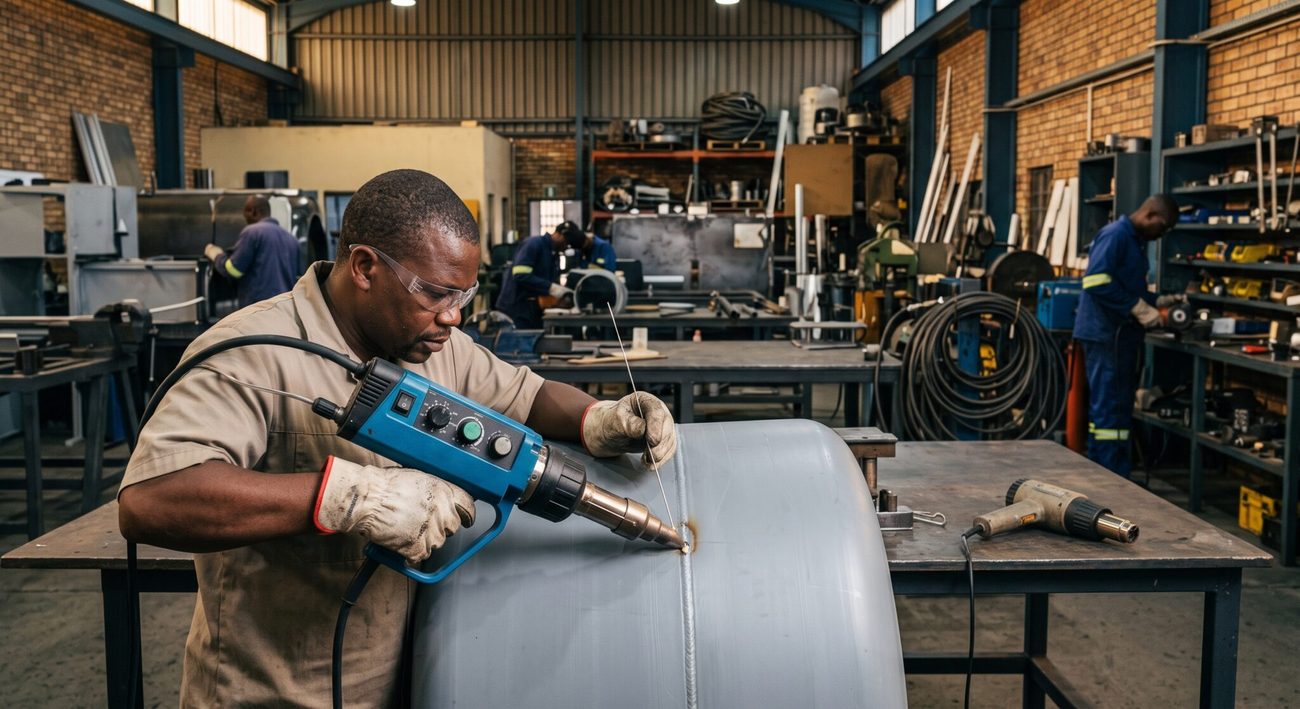
Plastek’s Swiss-made plastic welding tools outperform standard retail heating tools by delivering precise electronic temperature control, consistent airflow, and industrial durability. While standard hot air guns often struggle with temperature fluctuations that burn or under-melt polymers, Swiss-engineered systems maintain exact heat thresholds even during long operational shifts. This consistency is essential for securing strong molecular bonds in materials like HDPE, PP, and PVC, preventing structural failures in critical Johannesburg applications such as chemical tanks, reservoir liners, and agricultural pipes.
The Core Technical Differences: Swiss Engineering vs. Standard Heating
Standard heat guns are designed for DIY tasks like stripping paint or thawing pipes, where precise thermal management is unnecessary. In contrast, Swiss-engineered plastic welding systems are built specifically to handle the delicate thermodynamics of polymer chain alignment. Understanding which welding method is used for plastic is vital, as different materials demand highly specific thermal ranges. Standard tools simply blast hot air, which often degrades the plastic or leaves cold joints that break under load.
Our Swiss-made systems provide significant advantages for high-stakes fabrication tasks:
- Closed-loop electronic feedback loops that adjust power output in real-time to keep temperature stable.
- Specially designed ceramic heating elements that resist thermal shock and outlast cheap alternatives.
- Calibrated air nozzles that channel heat precisely to the weld zone without overheating the surrounding material.
Digital Calibration and Temperature Stability
When welding thermoplastic structures in Gauteng, ambient conditions can change quickly. A cold morning breeze can drop the temperature of standard heating tools, resulting in weak joints. Swiss-designed tools feature active sensors that monitor temperature directly at the nozzle tip, instantly adjusting power to maintain the set temperature within a single degree.
Durability in Demanding South African Industrial Environments
Johannesburg’s industrial sectors demand tools that can survive harsh on-site conditions, from dusty mining pits to hot warehouse floors. Standard hardware-store heating tools are not built for continuous daily use; they burn out quickly under heavy duty cycles. Plastek provides commercial-grade solutions, including heavy duty industrial plastic welding machines that operate reliably shift after shift.
When evaluating equipment for long-term reliability on South African work sites, several factors set Swiss engineering apart:
- Brushless motor technology that eliminates carbon brush wear and reduces maintenance intervals.
- Ergonomically balanced designs that minimise operator fatigue during long fabrication sessions.
- High-grade outer casings that withstand impact and high temperatures without cracking.
Handling Voltage Fluctuation and Power Supply Issues
Johannesburg fabricators often have to deal with unstable power grids or generator fluctuations on remote sites. Cheap heating tools are highly vulnerable to voltage drops, which can ruin a weld in seconds. Swiss-made equipment is built with advanced electronics that protect the internal components from minor voltage surges and dips, ensuring consistent welds even under less-than-perfect power conditions.
How Thermal Accuracy Prevents Costly Structural Failures
Using the wrong heat level when joining polymers causes hidden defects. If the air is too cool, the molecular chains of the plastic and filler rod do not fuse, creating a joint that will crack under pressure. If the air is too hot, the plastic oxidises and becomes brittle, which leads to immediate failure when the tank is filled or the pipe is pressurised.
Professional plastic fabricators rely on Swiss tools to manage heat levels because of key diagnostic advantages:
- Real-time digital displays that show both set and actual temperatures throughout the welding process.
- Adjustable airflow controls that let operators fine-tune the heat-transfer rate for thin membranes or thick sheets.
- Cool-down modes that protect the heating elements when powering off, extending the tool’s operating life.
Precision Solutions With Plastek
Selecting the right equipment ensures your plastic structures are built to last. At Plastek, we supply high-precision tools designed to meet the toughest standards in polymer fabrication. Get in touch with our team of specialists by clicking the button below to request a quote or discuss your project requirements.
FAQs
Can I use a standard paint-stripping heat gun to weld plastic?
While standard heat guns generate heat, they lack the precise temperature control, steady airflow, and specialised nozzles required to fuse polymers. Using them often leads to weak welds, burnt materials, and joint failure.
Why are Swiss-made plastic welding tools more expensive than standard tools?
Swiss-made tools are built with industrial-grade components, including advanced electronic temperature regulators, heavy-duty motors, and ceramic heating elements. This engineering ensures consistency, safety, and a significantly longer lifespan in tough working environments.
How does fluctuating voltage in South Africa affect plastic welding?
Voltage drops can cause standard heat guns to lose temperature, resulting in cold joints that fail under pressure. Swiss-made tools are equipped with internal electronic systems that stabilise power output, maintaining a constant temperature even during minor fluctuations.
What materials can be welded using Plastek tools?
Plastek’s range of professional hot air tools can weld a wide variety of thermoplastics, including high-density polyethylene (HDPE), polypropylene (PP), polyvinyl chloride (PVC), and polyvinylidene fluoride (PVDF), provided the correct temperature and filler material are used.
